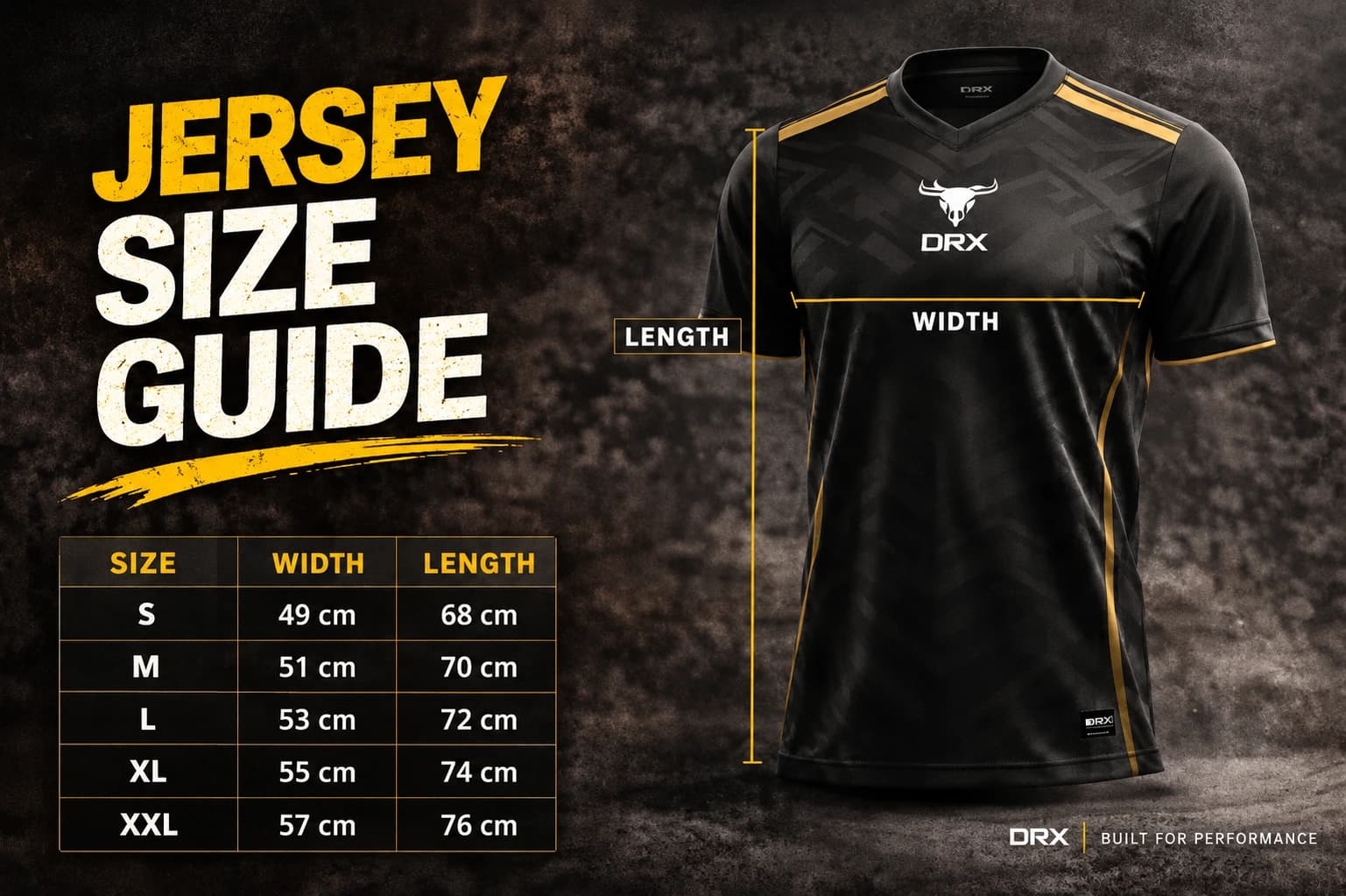
Have you ever experienced this? You bought a jersey online, already chose size “L”… but when you wore it:
- Too tight around the chest
- Or even too oversized and looked “baggy”
- Uncomfortable to wear for sports
In the end? The jersey you bought never gets worn again. Or worse…
You have to buy another one.
- The problem is not you.
- But because you still don’t understand how to determine the correct jersey size.
And this is one of the most common mistakes when buying apparel—whether online or custom-made.
How to Determine Jersey Size
How to determine the right jersey size is by measuring chest circumference and body length, then matching them with the brand’s size chart because each vendor has different sizing standards.
What Is Jersey Size?
Jersey size is the standard clothing dimension used to determine whether a jersey will fit someone’s body properly.
Usually, sizing is determined by several main parameters:
- Chest circumference
- Body length
- Shoulder width
- Sleeve length (for certain jerseys)
These sizes are then categorized into:
- S
- M
- L
- XL
- XXL
But what people often don’t realize: The size label is not the main reference—the size chart is the key.
Why Is It Important to Choose the Right Jersey Size?
Many people underestimate sizing.
Even though the impact is significant.
❌ The Impact of Choosing the Wrong Size
- The jersey feels tight → difficult to move
- Too loose → disrupts activity
- Uncomfortable for long wear
- Appearance looks less optimal
❌ Financial Impact
- Unused jersey
- Need to buy again
- Waste of money
✅ Benefits of the Right Size
- Comfortable to wear
- Supports sports performance
- More confident
- Neater appearance
Important insight:
The right size can completely change your experience when wearing a jersey.
Standard Jersey Sizes (That You Must Know)
In general, jersey sizes consist of:
| Size | Chest Circumference | Length |
| S | ± 48–50 cm | ± 68–70 cm |
| M | ± 50–52 cm | ± 70–72 cm |
| L | ± 52–54 cm | ± 72–74 cm |
| XL | ± 54–56 cm | ± 74–76 cm |
| XXL | ± 56–58 cm | ± 76–78 cm |
But remember:
Every brand can be different. Never buy a jersey based only on the size label (M, L, XL). Always check the size chart.
Local vs International Jersey Sizes
This also often causes people to choose the wrong size.
| Aspect | Local | International |
| Fit | Smaller | Larger |
| Cutting | Slim | Regular |
| Feel | More fitted to the body | Looser |
Example:
- Local L ≈ International M
How to Determine the Right Jersey Size (Step-by-Step)
Step 1: Measure Your Body
Use a measuring tape:
- Chest circumference → widest part
- Body length → shoulder down
Step 2: Compare with the Size Chart
Do not skip this step.
Match your measurements with the vendor’s chart.
Step 3: Determine the Type of Fit
- Slim fit → tighter, suitable for sports
- Regular fit → standard
- Oversize → relaxed & casual
Step 4: Adjust to the Activity
- Sports → choose a more fitted size
- Casual → can be looser
Step 5:Consult with the Vendor
Professional vendors usually:
- Provide recommendations
- Do not just sell products blindly
Practical Tips to Avoid Choosing the Wrong Size
To be safer:
- Always measure your body before buying
- Do not use old size references
- Pay attention to the material (stretchy or not)
- Choose 1 size bigger if unsure
- Save the size chart for reference
If you are unsure between two sizes, choose the larger one for comfort.
Common Mistakes That Often Happen
❌ Assuming All Brands Are the Same
In fact, every brand has different sizing
❌ Not Measuring Your Body
Just guessing
❌ Using Old Sizes
In fact, body size can change
❌ Not Checking the Material
Material affects the fit
How to Avoid These Mistakes
- Use the size chart
- Measure your body again
- Consult with the vendor
Insight from Expert
In the apparel industry:
- 80% of comfort is determined by size & fit
- 20% by design
Important factors:
- Cutting
- Material elasticity
- Body shape
Important insight:
A well-fitted jersey will feel “connected” to the body, not disturbing.
Size is not only about style.
If It Is Too Small:
- Restricted movement
- Gets hot quickly
- Uncomfortable
If It Is Too Large:
- Disrupts activity
- Not aerodynamic
- Looks less neat
Ideal size:
Fits the body while still allowing freedom of movement.
Solution: Choose a Vendor that Helps Determine Size
If you do not want to choose the wrong size again:
✔ Choose a vendor that provides a clear size chart
✔ Offers size consultation
✔ Can customize sizes
DRX Wear can be the best solution
Advantages:
- Detailed size chart
- Custom sizing available
- FREE consultation
- Suitable for teams & individuals
Don’t Choose the Wrong Size Again
Now you already know:
- How to determine jersey size
- Mistakes to avoid
- Tips for choosing the right size
Do not stop at theory. Start by:
- Measure your body now
- Match it with the size chart
- Consult before buying
FREE consultation with DRX Wear now
✔ Assisted in choosing the right size
✔ Custom according to your needs
✔ Comfortable to wear
FAQ (Frequently Asked Questions)
How do you determine jersey size?
Measure chest circumference and body length, then match them with the size chart.
Is jersey sizing the same as T-shirts?
Not always, because the cutting and materials are different.
Is it better to choose tight or loose?
For sports: a slightly fitted size is better.
Can jersey sizes be customized?
Yes, depending on the vendor.
If unsure, what size should I choose?
Choose one size larger.
For deeper understanding:
- What is Jersey
- The Difference Between Jersey and T-Shirt
- Local Jersey Brands
Conclusion & Next Steps
Jersey size is not a trivial matter. If you choose the wrong size:
- Uncomfortable
- Unused
- Waste of money
But if you understand:
- How to measure
- Size charts
- The right fit
You can get:
✔ Maximum comfort
✔ Better performance
✔ A more confident appearance
Now it’s time to take action.
Start from:
- Measure your body
- Choose the right size
- Consult before purchasing
Because the right jersey is not only about size, but also about comfort and the experience when wearing it.