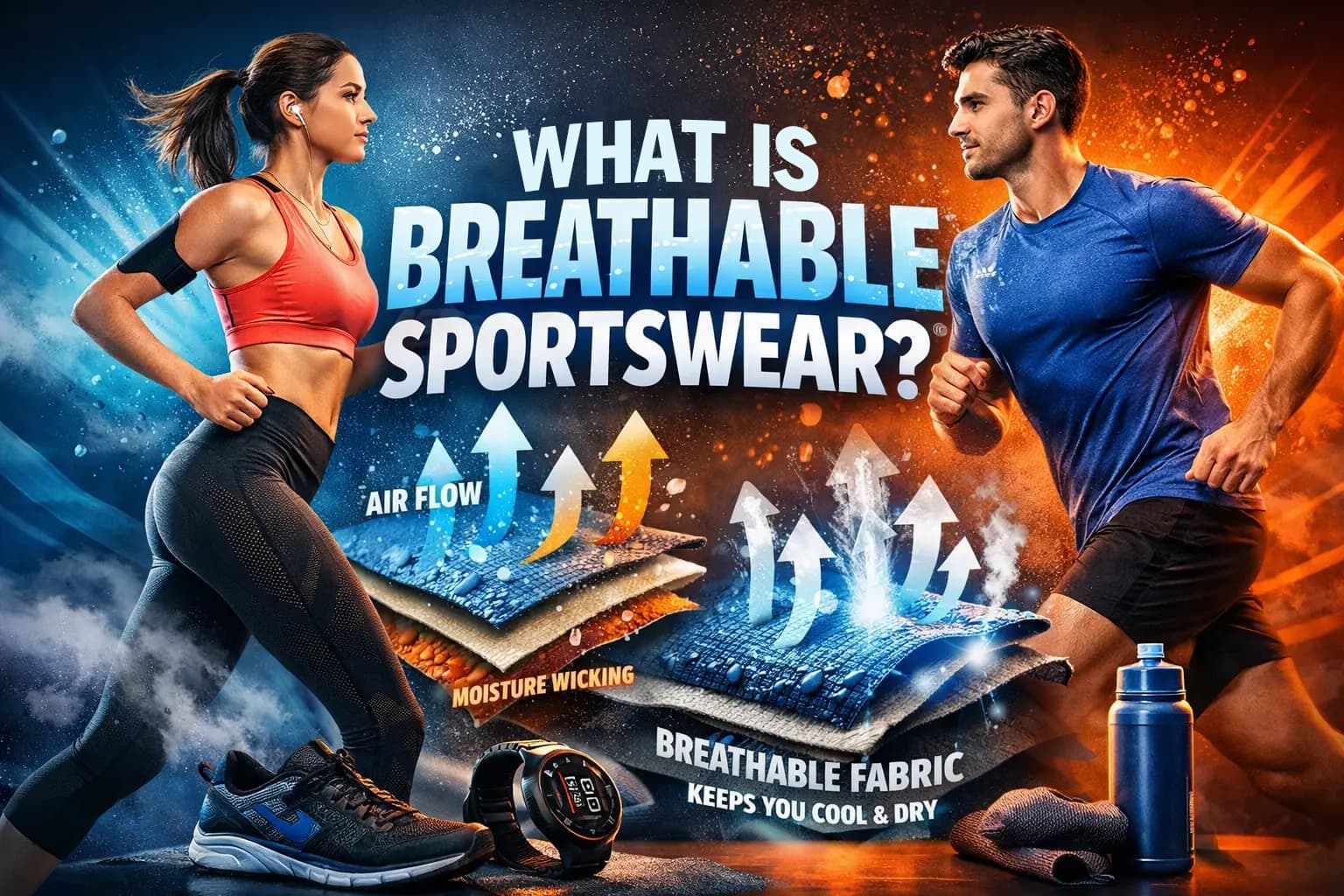
In recent years, the term breathable sportswear has become increasingly common in the world of sports and activewear. Almost all modern sportswear brands claim their products are breathable, quick-dry, or anti-heat.
But what exactly is breathable sportswear? Is it just a marketing jargon, or does it actually have a real technical function?
For athletes, sports enthusiasts, and even those who wear activewear daily, understanding breathable sportswear is crucial. The right clothing not only enhances comfort but also improves performance, supports skin health, and helps the body adapt to climatic conditions—especially in tropical countries like Indonesia.
This article provides a comprehensive, technical, and practical discussion of breathable sportswear, so you can make the right choice when buying one.
Technical Definition of Breathable Sportswear
Technically, breathable sportswear is sports clothing designed to allow air to flow freely and moisture (sweat) to escape from the skin's surface quickly.
In the textile industry, breathable sportswear has two main characteristics:
- Air permeability
- Moisture vapor transmission
This means that the fabric:
- Does not retain heat
- Does not trap sweat
- Helps the body regulate temperature naturally
Unlike regular clothing, breathable sportswear is made with:
- Technical synthetic fibers
- Special fabric structures (mesh, micro-porous)
- Moisture-wicking technology
How Airflow & Moisture Management Work
To fully understand breathable sportswear, we need to look at how it works.
a. Airflow
Breathable sportswear allows:
- Cool air to enter
- Hot air to escape
This is achieved through:
- Pore-like fabric structure
- Mesh panels in specific areas (underarms, back, sides)
- Loose yet strong fiber weave
With a good airflow, body temperature remains stable while exercising.
b. Moisture Management
Moisture management is a fabric’s ability to:
- Draw sweat away from the skin (wicking)
- Distribute sweat across the fabric surface
- Evaporate moisture quickly
Hence, breathable sportswear is often combined with these technologies:
- Quick-drying
- Moisture-wicking
- Hydrophobic fibers
Without proper moisture management, the fabric will be:
- Become heavier
- Stick to the skin
- Emit unpleasant odors
Benefits of Breathable Sportswear for High-Intensity Sports
Breathable sportswear is crucial for high-intensity sports, such as:
- Fooball
- Padel
- Futsal
- Running
- Gym
- Cross training
a. Maintaining Body Temperature
During intense exercise, the body generates excess heat. Breathable clothing helps:
- Prevent overheating
- Reduce the risk of heat exhaustion
b. Improves Comfort during Movement
Clothing that does not absorb sweat will:
- Stick to the skin
- Distract focus
- Restrict movement
Breathable sportswear makes:
- The body feel lighter
- Movement less restricted
- Workouts last longer
c. Reduces the Risk of Skin Irritation
Trapped sweat can trigger:
- Rashes
- Itchiness
- Bacteria
Breathable sportswear helps keep the skin dry and healthy.
Breathable vs Regular Fabric Comparison
| Aspect | Breathable Fabric | Regular Fabric |
| Air circulation | Excellent | Minimal |
| Sweat absorption | Quick and efficient | Slow |
| Drying time | Fast | Slow |
| Comfort | High | Low |
| Suitable for sports | Yes | Not ideal |
| Risk of odor | Low | High |
Regular fabrics like cotton may feel soft, but they:
- Absorb too much sweat
- Take a long time to dry
- Become heavy when wet
This is why cotton is less ideal for high-intensity sports.
Signs of Non-Breathable Fabric
Not all sportswear is truly breathable. Here are signs of non-breathable fabric:
- It feels hot quickly.
- Sweat accumulates inside the fabric.
- The fabric sticks to the skin.
- It feels heavy after sweating.
- Unpleasant odor develops quickly.
- It takes a long time to dry.
If you often experience the above, it’s likely that the clothing you are wearing is not breathable.
Best Breathable Material Recommendations
Here are some of the most commonly used breathable sportswear materials:
a. Polyester Performance
- Lightweight
- Strong
- Quick-dry
- Easy to care for
Modern polyester is very different from the old polyester, which is hot.
b. Mesh Fabric
- Large pores
- Maximum airflow
- Very suitable for tropical climates
Commonly used as:
- Ventilation panels
- Sports jerseys
c. Nylon Technical Fabric
- Smoother
- More elastic
- Durable
Often used in:
- Sports bras
- Compression wear
- Premium activewear
d. Blended Fabric (Polyester + Spandex)
- Breathable
- Stretchy
- Comfortable for dynamic movements
Tips for Choosing Breathable Products in Tropical Climates
Indonesia’s climate is:
- Hot
- Humid
- High sweat levels
Therefore, choosing breathable sportswear cannot be taken lightly.
Practical tips
- Examine the label
- Look for the keywords: breathable, quick-dry, moisture-wicking
- Choose a lightweight fabric
- Avoid fabrics that are too thick
- Pay attention to ventilation areas
- Adjust to the type of activity
- Try on the sportswear if possible
- Choose brands that understand the tropical climate
A good breathable sportswear will feel comfortable, even when:
- Worn for long periods of time
- Worn outdoors
- Worn during the day
Breathable Sportswear in the Active Modern Lifestyle
Today, breathable sportswear is not only worn for sports, but also for:
- Daily activities
- Streetwear
- Traveling
- Working from anywhere
This is why modern breathable sportswear is designed to be:
- Functional
- Stylish
- Multifunctional
This makes breathable sportswear the new standard in activewear.
Conclusion
Breathable sportswear is sportswear technically designed to:
- Allow air to flow
- Manage sweat
- Maintain body temperature
- Provide maximum comfort
Understanding what breathable sportswear is helps you:
- Choose the right clothing
- Improve athletic performance
- Avoid discomfort and irritation
- Adapt to tropical climates
Breathable sportswear is not just a trend, but a real necessity for anyone leading an active lifestyle.