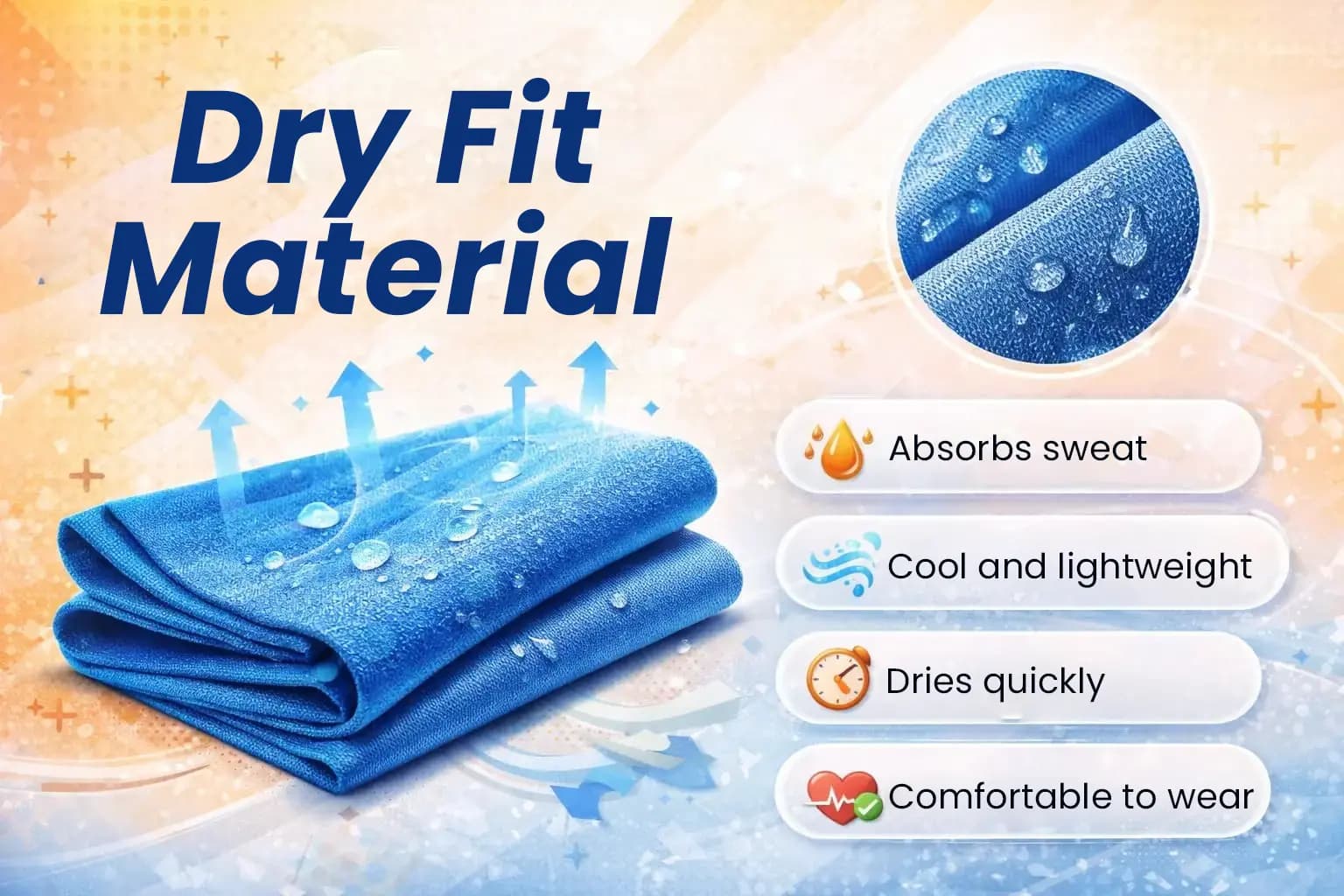
In the world of modern sports, fabric selection plays a major role in an athlete’s comfort and performance. One of the most common materials for sports jerseys is dry fit.
This material is often used for football, futsal, badminton, and even running outfits because of its ability to absorb and evaporate sweat quickly.
If you often see professional sports jerseys or modern sports shirts, they most likely use dry fit materials. This fabric’s technology is designed specifically for intense physical activities so the body stays dry and comfortable.
This article will discuss the definition of dry fit materials, their types, advantages, comparison with other materials, and tips for choosing the right material for custom jerseys.
What is a Dry Fit Material?
Definition of Dry Fit Material
Dry fit is a type of synthetic fabric designed with moisture-wicking technology, which is the fabric’s ability to absorb sweat from the skin and transport it to the surface of the fabric for faster evaporation.
Most dry fit materials are made of polyester fibers or microfiber, both of which have specific fiber structures. The structure promotes good airflow, keeping the body cool during heavy exercise.
Because of these characteristics, this material is often used for:
- Football jerseys
- Futsal jerseys
- Running shirts
- Gym shirts
- School sports jerseys
- Community jerseys
How Does Moisture Wicking Technology Work?
Moisture wicking works by transporting sweat from the skin to the fabric’s surface. Thus, sweat will evaporate faster because it is distributed in the fabric’s wide surface area.
As a result:
- The body feels dry
- Clothes don’t feel heavy
- Reduces the risk of skin irritation due to sweat
This technology is one reason dry fit is so popular in the sports apparel industry.
Key Characteristics of Dry Fit Materials
Dry fit has several characteristics that put it at an advantage over regular fabric.
1. Quick Drying
One of dry fit’s key advantages is its quick-drying ability. Sweat doesn’t linger on the fabric, so clothes can feel light.
This is very important for athletes or those who exerrcise for long periods of time.
2. Breathable (Good Air Circulation)
Dry fit materials’ fibers are structured in a way that allows air to circulate easily. This way, body heat can be regulated so the body stays cool.
3. Lightweight and Comfortable
Synthetic materials like polyester make dry-fit fabric feel light. Even with sweat, dry fit will not feel heavy, unlike cotton.
4. Elastic and Flexible
Many types of dry fit materials possess good elasticity so they don’t restrict movement when exercising.
5. Durable
Dry fit is also known as a durable material that doesn’t get damaged easily. With proper maintenance, dry fit materials can be worn for a long time without degrading its quality.
Types of Dry Fit Materials for Sports Jerseys
Dalam industri apparel olahraga, terdapat beberapa jenis bahan dry fit yang sering digunakan.
1. Polyester Dry Fit
This is the most common dry fit material, known for being:
- Strong and durable
- Lightweight
- Suitable for sublimation printing
Because of its relatively affordable price, this type of dry-fit material is often used to mass-produce team jerseys.
2. Microfiber Dry Fit
Microfiber dry fit has a smoother texture than regular polyester. Its advantages are:
- Softer on the skin
- Lighter
- More comfortable for intense sports
This type is often used for premium jerseys..
3. Mesh Dry Fit
This type has bigger pores for better air circulation.
Advantages of mesh:
- Excellent air circulation
- Suitable for exercising in hot weather
This material is often present on the jersey’s sides or back.
4. Hexagonal or Milano Dry Fit
This type has a unique texture akin to a beehive or hexagonal shape.
Its characteristics are:
- More premium look
- Stronger
- Used in professional jerseys
Comparison of Dry Fit with Other Materials
Understanding different fabrics is necessary before choosing sports jerseys.
| Fabric Type | Advantages | Disadvantages | Suitable For |
| Dry Fit | Quick-drying, lightweight | More expensive | Sports jerseys |
| Cotton | Soft | Absorbs water easily | Casual shirts |
| Regular polyester | Strong | Not as breathable | Uniforms |
| Spandex | Very elastic | Expensive | Compression wear |
Dry Fit vs Cotton
Cotton is soft and comfortable, but it has a major weakness in sports apparel, namely absorbing too much water. When covered in sweat, cotton shirts will feel heavy and damp.
On the other hand, dry fit doesn’t store sweat for long, so it is more comfortable for physical activities.
Dry Fit vs Regular Polyester
Regular polyester is durable, but not all possess moisture-wicking technology. Dry fit is a version of polyester that has been modified to be breathable and quick drying.
Why Dry Fit is Ideal for Custom Jerseys
Many sports apparel vendors choose dry fit for custom jersey production because of these factors.
Suitable for Different Sports
Dry fit can be used for multiple different sports, such as:
- Football
- Futsal
- Basketball
- Badminton
- Volleyball
- Running
- Gym
Because it is light and dries quickly, this material is very flexible for many activities.
Supports Jersey Printing
Dry fit is very suitable for multiple jersey printing methods, such as:
- Sublimation
- Screen printing
- Heat transfer
However, in the modern jersey industry, sublimation is the most popular method for its sharp and durable colors.
Colors Last Longer
Polyester fibers in dry fit materials allow sublimation ink to fuse into the fabric’s fibers. This prevents the colors from fading even after repeated washes.
Tips for Choosing Dry Fit Materials for Jersey
If you want to produce custom jerseys for your team or community, pay attention to these tips.
1. Pay Attention to GSM
GSM (grams per square meter) determines the fabric’s thickness. Typically, jersey materials have a GSM between:
- 130 gsm
- 150 gsm
- 180 gsm
The higher the GSM, the thicker the fabric will feel.
2. Choose an Experienced Vendor
An experienced vendor will have:
- Multiple dry fit material options
- Better printing quality
- More structured production process
3. Choose the Right Printing Method
For sports jerseys, sublimation printing is the best option because:
- Colors last longer
- Designs can be in full color
- Printing doesn’t peel easily
FAQ About Dry Fit Materials
Is dry fit material hot when worn?
No. Dry fit is designed for excellent circulation so the body stays cool during exercise.
Is dry fit suitable for futsal jersey?
Yes. Dry fit is suitable for futsal because it is light, elastic, and dries quickly when exposed to sweat.
Is dry fit better than cotton for sports?
For sports activities, dry fit is better because it doesn’t absorb excessive sweat the way cotton does.
Does dry fit get damaged easily?
No. With proper care, dry fit materials can last long and still feel comfortable when worn.
Can dry fit be used for custom jerseys?
Yes. Dry fit is the most common material for custom jerseys because they are suitable for sublimation printing.
Conclusion
Dry fit is one of the best materials for modern sports apparel. With moisture-wicking technology, this material keeps the body dry and comfortable during physical activities.
Dry fit’s advantages include
- Dries quickly
- Light and breathable
- Durable
- Suitable for many kinds of sports
- Supports quality jersey printing
So, it is not surprising that this material is the best choice for jersey production, both for professional and custom jerseys.
Want to get a custom jersey with quality materials?
You can now design your own team jersey with premium materials that are comfortable during exercise with DRX Wear.
Why choose us?
✔ We use premium dry fit materials
✔ Free custom jersey designs
✔ Suitable for teams, communities, schools, and sports events
✔ High-quality sublimation printing
Consult your jersey designs now and get the best offer for your team.